WordWhizzle Connect
Apprope ABWord
4.62.36K Reviews
- Version
- 1.6.6
- Installs
- 100.00K
- Age Rating
- Everyone
Screenshots
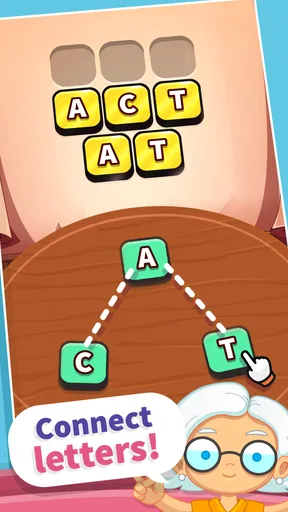
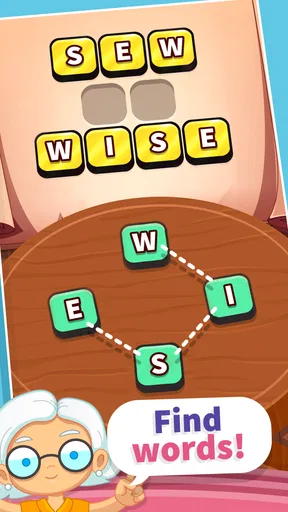
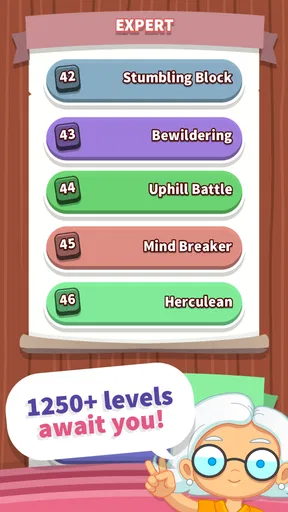
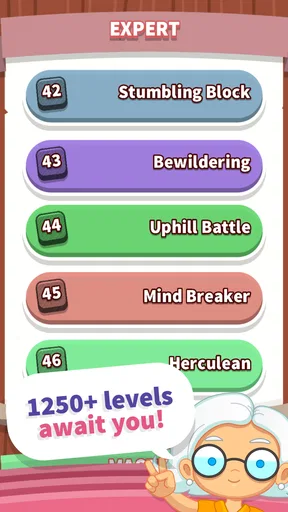
Our Review of WordWhizzle Connect
 Analysis by Appyee
I approached WordWhizzle Connect expecting a straightforward word game, but its appeal became clearer after several short sessions. Developed by Apprope AB, it is built around the simple pleasure of spotting relationships between letters and words without demanding a large time commitment. The presentation is light, the rules are easy to understand, and the game encourages the kind of quiet concentration that fits a coffee break, a commute, or a few minutes before bed.
What I like most is that it does not try to bury its central idea under a complicated story or a crowded interface. The focus stays on making connections, testing vocabulary, and deciding whether a word belongs. That clarity makes it approachable for casual players, while the later challenge comes from seeing patterns quickly rather than learning a long list of controls. It is free to start, rated for Everyone, and available for devices running Android 7.0 or later. The current version is 1.6.6.
The game has built a respectable audience, with over one hundred thousand installs, a 4.6 average from around eight thousand ratings, and roughly two thousand reviews. Those figures do not tell me whether every player will enjoy its style, but they do match my impression that this is an accessible puzzle aimed at broad everyday play rather than a niche word-game audience.
A calm first impression that gets out of the way
The first thing I noticed was how quickly I could begin playing. There is very little friction between opening the game and facing a word challenge, which matters for this genre. A word puzzle loses part of its charm when the player has to navigate several menus before reaching the actual puzzle. Here, the basic experience feels direct: look at the available material, search for a connection, and make a choice.
That simplicity also shapes the visual identity. I would not describe the art direction as dramatic or richly narrative. Instead, it supports concentration by keeping the screen readable and the puzzle area visually dominant. This is a good decision for a game that depends on noticing letter patterns. Decorative elements would have to earn their place, and the restrained approach avoids making the board feel busier than the challenge itself.
The setting is more of a mental space than a fictional world. I did not come to the game for characters, plot twists, or an elaborate theme. I came for a compact vocabulary exercise, and the presentation reinforces that expectation. The lack of a heavy story is not a weakness here; it means the game can be opened in short bursts without asking me to remember narrative details or reconstruct a larger context.
That makes it particularly suitable for people who want a casual brain teaser rather than a full-length game session. I can imagine playing it while waiting for an appointment, during a quiet lunch, or when I want something more active than scrolling but less demanding than a strategy game. The short-session design also makes it easy to stop without feeling that I have abandoned a larger objective.
Who will feel comfortable with the format
WordWhizzle Connect works best for players who enjoy discovering links between words and who are happy to think through a puzzle instead of relying on reflexes. It is also a reasonable choice for families because the age rating is Everyone and the core activity is language-based rather than dependent on combat, frightening imagery, or complicated social interaction. Younger players may still find some puzzles difficult because vocabulary knowledge varies widely, but the basic format is easy to explain.
I would recommend it to someone who likes daily word puzzles but wants a little more flexibility than a single once-a-day challenge. It can also suit players who enjoy crossword-style thinking but prefer a cleaner, more compact interaction. On the other hand, anyone looking for a rich campaign, competitive multiplayer, or a strong fictional setting should look elsewhere. This game’s identity comes from its word challenges, not from a larger adventure wrapped around them.
One practical point is the cost. The game is free, while optional in-app purchases range from under a dollar to just under fifty dollars per item. That makes it easy to try without committing money at the beginning, but I would still pay attention to purchase prompts if I were handing the device to a child. Players who want a completely purchase-free experience may prefer a paid word game with a single upfront price, even if that means accepting fewer puzzles or a different presentation.
How the game communicates through words and visual mood
The strongest form of world-building here is linguistic. Instead of asking me to explore a map or follow a character, the game creates its sense of place through associations between words. Each puzzle becomes a small environment made from language: familiar terms can feel welcoming, while an unexpected connection creates the same small jolt of discovery that a visual game might produce through a hidden path or a new location.
That approach gives the game a coherent mood without overexplaining itself. The screen does not need to tell me how to feel because the act of searching already supplies the tension. I move from confidence to doubt, test a possibility, and then either enjoy the confirmation or reconsider my assumption. The emotional movement is modest, but it is real, and it comes directly from the mechanic.
I found that the visual restraint helps this language-first design. When the board is easy to read, I can compare possible connections without fighting the interface. This is especially useful in a word game because the challenge should come from interpretation, not from guessing which decorative element is interactive. The cleaner presentation also makes the game feel less tiring during longer sessions.
There is a trade-off, though. Players who need strong visual variety may find the presentation repetitive over time. A puzzle built around words naturally has fewer opportunities for spectacle than a platform game or a match-based title with animated effects. I did not see that as a problem during short sessions, but it could matter if I wanted to play continuously for a long evening. The game is better at sustaining a focused mood than at delivering constant visual novelty.
The useful tension between familiar and unfamiliar vocabulary
A subtle strength is the way word familiarity affects pacing. When I recognize a connection quickly, the game feels breezy and satisfying. When the relationship is less obvious, the same simple interface becomes a space for careful elimination. That variation keeps the experience from feeling like a pure speed test. It rewards patience as much as instant recall.
My most useful habit was to avoid locking onto the first plausible answer. In a connection-based puzzle, a word can appear to fit because it shares a broad meaning with another term, yet the intended relationship may be narrower. I found it better to scan all available possibilities first, identify the strongest cluster, and only then commit. This reduces the frustration of following an attractive but incomplete idea.
Another good approach is to use the game as a vocabulary warm-up rather than treating every puzzle as a score challenge. If I encounter an unfamiliar term or an association I would not normally make, I pause and consider why it works. That turns a short game into a small language exercise. It is a more rewarding use of the app than rushing through every board simply to finish.
This is also where the game differs from a standard crossword. Crosswords often provide a grid, clues, and crossing letters that gradually confirm an answer. WordWhizzle Connect puts more emphasis on recognizing relationships within the presented material. A crossword may reward precise recall of a clue, while this game can reward flexible thinking and the ability to group ideas. Neither approach is automatically better; they exercise different habits.
Sound, rhythm, and the pace of a short session
The audio side of the experience is less important than the word interaction, which is appropriate. I did not feel that the game needed an elaborate soundtrack to justify its mood. The overall rhythm comes from the sequence of reading, considering, selecting, and moving forward. That creates a quiet pulse that supports concentration instead of competing with it.
For me, the pacing is most successful when I treat each puzzle as a self-contained pause. I can play one challenge, put the phone away, and return later without needing to rebuild momentum. This makes the game a good fit for fragmented time. It does not insist that I reserve a full hour, and it does not punish me emotionally for leaving after a small amount of progress.
The same structure may feel too gentle for players who want constant pressure. There is no obvious reason to choose this over a timed word game if the thrill comes from racing a clock or beating an opponent. I prefer the calmer rhythm because it lets me think about the connection itself, but someone who enjoys rapid-fire anagrams may find the experience less energetic than expected.
I also think the pacing affects how hints or assistance should be used. If I use help immediately whenever a puzzle slows me down, I lose the most interesting part of the game: the moment when several weak ideas gradually become one convincing pattern. My advice is to give myself a deliberate pause first. I look for shared meanings, related categories, or a possible change in how I am interpreting the words. Only after that do I consider assistance, because the pause is often enough to reveal the answer.
Why the rhythm works well away from home
The short, self-contained nature of the puzzles makes this a practical travel companion. I would choose it for a train ride or a waiting room because it does not require a stable physical setup, a large amount of attention, or a long uninterrupted story. The game can fill a small gap without turning that gap into a commitment.
There is also a useful mental boundary between this and passive entertainment. After a tiring day, I may not want a demanding action game, but I can still handle a few word connections. The activity is gentle without being completely mindless. That balance is one of the reasons I kept returning to it during brief breaks.
Still, I would not present it as a replacement for structured learning. It can encourage vocabulary awareness and flexible association, but it is primarily a game. Someone studying a language seriously would need an app designed for pronunciation, grammar, spaced repetition, or guided lessons. This title can complement those tools, but it does not serve the same purpose.
Where the mechanics fit, and where they may not
The central mechanic is easy to grasp, but the thinking behind it becomes more interesting as I stop treating each puzzle as a simple guessing exercise. The game asks me to interpret relationships, compare alternatives, and judge whether a connection feels intentional. That makes it more mentally engaging than a basic word scramble, where the main task is rearranging letters until a familiar term appears.
Compared with a typical crossword, the game feels less dependent on a fixed grid and more dependent on conceptual grouping. Compared with an anagram game, it places less emphasis on raw letter manipulation. Compared with a word search, it asks for meaning rather than visual scanning. These differences make it a good middle ground for players who like language puzzles but become bored when every challenge uses the same kind of recall.
The mechanic is not equally satisfying for everyone. If I prefer puzzles with one clearly measurable solution path, a connection-based format can sometimes feel subjective. A word may seem related to several ideas, and the intended answer may depend on the game’s particular wording. That kind of ambiguity is part of the challenge, but it can also create friction when I believe my reasoning is valid and the puzzle expects a different interpretation.
My workaround is to think in terms of the tightest group rather than the broadest possible link. I ask which words share the most specific relationship, not merely which ones can be connected through a distant association. This makes the puzzles feel fairer and helps prevent me from forcing a clever but unlikely answer.
The game is also better for deliberate play than for multitasking. I can pause between puzzles, but I do not recommend trying to solve one while watching a show or carrying on a conversation. The interface may be simple, yet the important work happens in attention. Missing one relationship can lead me down the wrong path, and the resulting frustration is not caused by complexity so much as divided focus.
A realistic everyday routine
Imagine finishing a grocery trip with ten minutes before a bus arrives. I might open the game, solve one puzzle quickly, and then spend the remaining time on another that requires more thought. If the bus comes before I finish, I can stop without losing the value of the session. That is a more natural fit than a game that expects a long match or a carefully planned campaign.
At home, I would use it differently. I might play a few rounds after dinner as a transition between work and rest. The word focus gives me something to concentrate on, but the lack of a heavy narrative means I do not have to become emotionally invested. For a family setting, one person could read the available words aloud and let others suggest connections, turning the solitary puzzle into a small conversation without needing a separate multiplayer mode.
Players who struggle with spelling-heavy games may appreciate that the challenge is not simply typing obscure words from memory. However, comfort with English vocabulary still matters. If a player regularly finds the language itself tiring, the game may feel more like a test than a relaxing pastime. In that case, a visual puzzle or a word game with stronger clue support would probably be a better choice.
Because the game is free to download, I would suggest trying it before deciding whether the purchase options matter to you. If you enjoy the basic loop and want to continue, the optional items may be convenient. If you dislike the first few puzzles or prefer a fully offline-feeling, one-price product, there is little reason to force yourself to stay. The value depends on whether the connection mechanic is enjoyable on its own.
The atmosphere verdict: a focused word game with a clear identity
My overall impression is that WordWhizzle Connect succeeds by keeping its mood and mechanics aligned. The visual direction stays out of the way, the setting is created through language rather than story, and the rhythm encourages short periods of calm concentration. Nothing feels designed to distract me from the central act of finding a relationship between words.
I would recommend it to casual puzzle players, vocabulary enthusiasts, families looking for an Everyone-rated activity, and anyone who likes games that fit naturally into spare minutes. It is especially appealing if you want something quieter than a competitive word title but more mentally active than passive phone use.
I would skip it if my priority were a rich adventure, dramatic sound design, fast competition, or a deep progression system. I would also choose a conventional crossword when I wanted clue-and-grid structure, an anagram game when I wanted speed, or a language-learning tool when I needed systematic study. This game occupies its own narrower space, and it is strongest when that space matches what I want.
Apprope AB has made a free word game that understands the value of restraint. Its best moments come from the small shift between “I see it” and “perhaps I do not,” followed by the satisfaction of finding the intended connection. The optional purchases, possible repetition in presentation, and occasional ambiguity keep it from being perfect, but they do not undermine the core experience.
My recommendation is simple: try it when you want a calm, compact word challenge rather than a full-scale game. Give each puzzle a few thoughtful seconds, look for the most specific relationship, and resist using help too quickly. Played that way, it becomes more than a quick distraction; it is a tidy little exercise in attention, vocabulary, and flexible thinking.
Verdict
Strengths of WordWhizzle Connect
- Hundreds of word puzzles provide plenty of content for regular play.
- Simple swipe controls make it easy to play on phones and tablets.
- Short levels are convenient for quick breaks or casual sessions.
- Gradually harder puzzles offer a satisfying challenge over time.
- Offline play lets you solve puzzles without a constant internet connection.
Limitations of WordWhizzle Connect
- Some later puzzles can feel repetitive once familiar word patterns appear.
- Hints may be limited, making difficult levels frustrating without extra help.
- Small screens can make letter connections harder to see comfortably.
- The game may become predictable for experienced word-puzzle players.
- Progress can feel slow if you prefer fast-paced or highly varied gameplay.
Other Releases by Apprope AB
View All
WordBubbles
Word4.4

WordWhizzle Pop
Word4.6
Similar Picks in This Category
View All
Word Search - Word Puzzle Game
Bluetile4.8

Word Search Quest - Puzzles
Blackout Lab4.8

CodyCross: Crossword Puzzles
Fanatee, Inc.4.7

Words of Wonders: Crossword
Fugo Games4.9

Wordscapes: Word puzzle game
PeopleFun4.7

Word Search Explorer
PlaySimple Games4.9
Frequently Asked Questions
What is WordWhizzle Connect?
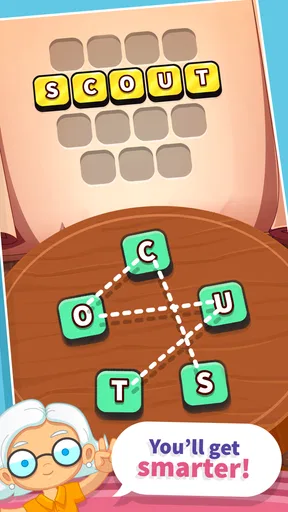
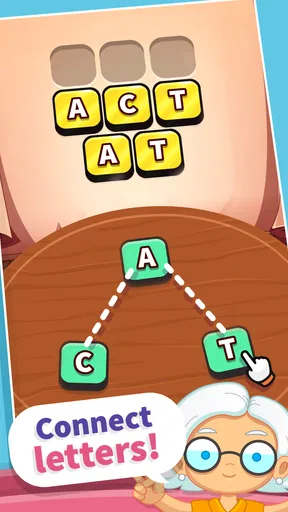
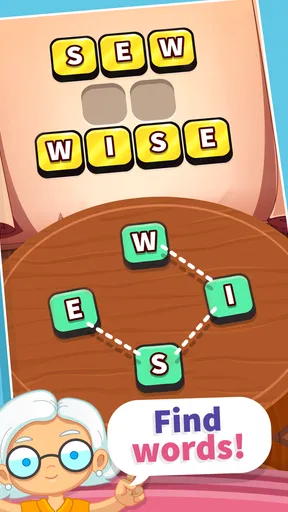
WordWhizzle Connect is a word puzzle game in which you connect letters to form hidden words and complete themed levels. The game is designed for short, casual sessions, but its progressively more difficult puzzles can also provide a longer challenge. It combines a simple swipe-based interface with vocabulary testing, making it suitable for players who enjoy word searches, anagrams, and brain-training games.
How do you play WordWhizzle Connect?
To play, swipe across the available letters to create words that match the current puzzle. Some answers are clearly related to the displayed theme, while others may require experimenting with different letter combinations. As you progress, levels generally become less obvious and demand a broader vocabulary. The controls are easy to understand, although finding every solution can take patience when the word list becomes more challenging.
Is WordWhizzle Connect free to download and play?
WordWhizzle Connect can generally be downloaded without an upfront purchase, allowing players to try the core puzzle experience for free. However, free mobile games may include advertising and optional in-app purchases, such as hints or other conveniences. Before downloading, it is worth checking the current Google Play or App Store listing for the latest information about ads, purchases, and any available premium options.
Does WordWhizzle Connect work offline?
Many of the basic puzzles in WordWhizzle Connect may be playable without a continuous internet connection once the game has been installed and its required content is available. Offline behavior can vary by device version and may not include advertisements, synchronization, updates, or purchase-related features. If you plan to play while traveling, test the game in airplane mode first rather than assuming every feature will remain available.
Is WordWhizzle Connect suitable for children and casual players?
WordWhizzle Connect is approachable for casual players because its main mechanic is simple: connect letters to discover words. It can also encourage spelling, vocabulary recognition, and concentration, although the difficulty may eventually challenge younger players. Parents should review the current age rating, advertising, and in-app purchase information before allowing children to play, since these details can change between Android and iOS versions.
Play our best games!


